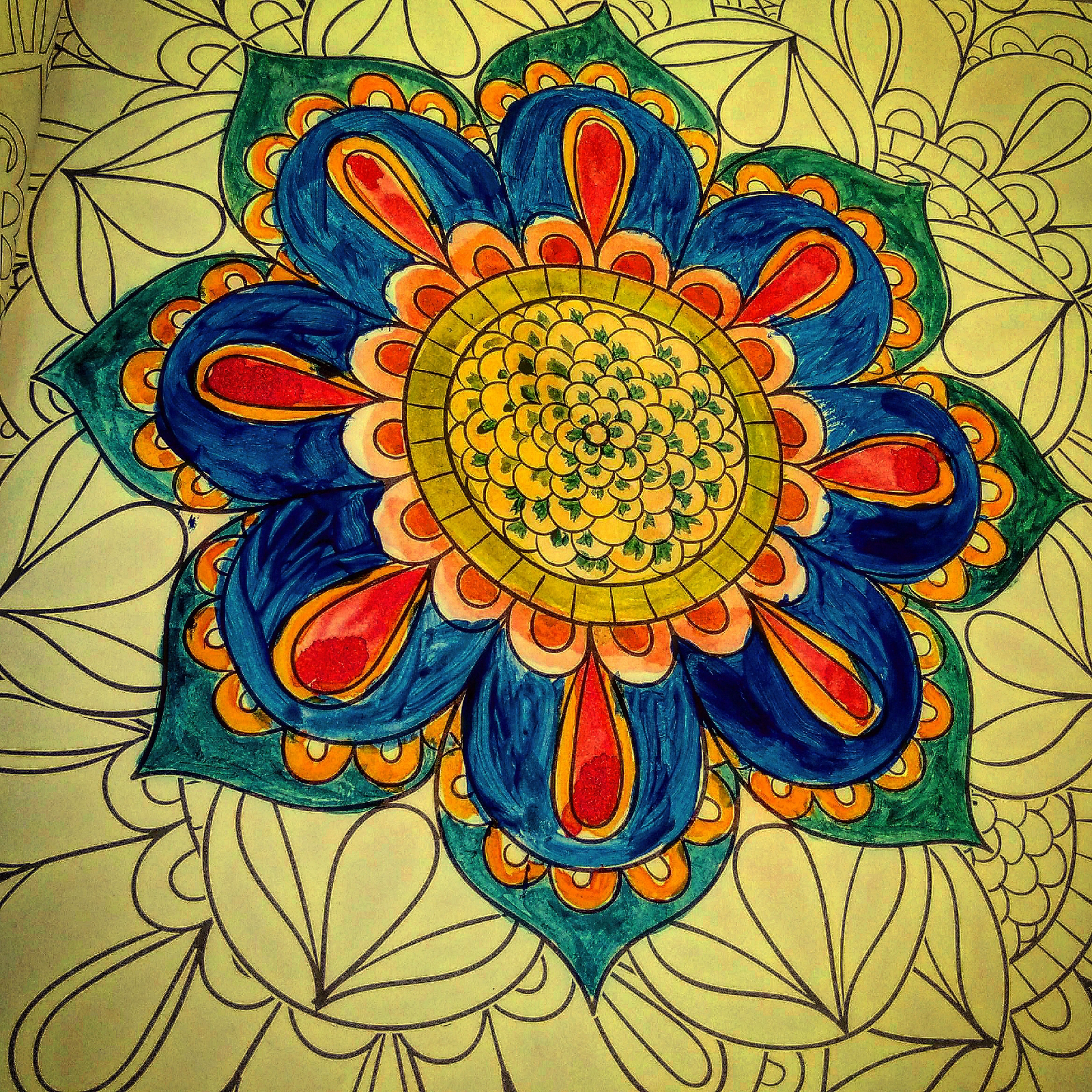
Acrylic watercolor weekend

Painting has been there from young age. But with the time that has passed and I have become addictive to this hobby.  It is more of my livelihood. 

Watercolor has a very fine texture, combination of acrylic, ink, poster color, chalk paint gives a resist pattern of the Canvas.

Today I took some time out and I got my color kit, brushes and sat down to paint.
On a watercolor paper it is easier to do the shade part and the gradient background. Acrylic technique can  be done by layering the brush with enough color and also with more water and less paint.

After a half an hour break, I got my Greeting card sample and I did some petals on top of the heart like shapes which are stuck onto the card. It was looking beautiful and styled card.

I was with class session on Watercolors.  Now, as the Acrylic color was left I thought why not I paint for some more time. I took out my Coloring book and picked up a page that would suit the best. 
Acrylic watercolor technique has always been the most interesting one. One reason because we can give a 3d effect to whatever ordinary image to something formal.

This a floral design with the Microtip pen. I had a little break during my work in the evening. I said to myself why not paint some more. And that is what I got to show.  You can name it as a casual design Greeting card.

Thank you for visiting and viewing my ipage blog. Next is more on textures of watercolor magic. I shall see you then.

Cheers,
Gcb studio 

Comments

Popular posts from this blog

Concept of Creativity

  The "new concept of creative" generally refers to   an overarching, innovative theme or idea   that serves as the foundation for a project or campaign, moving beyond simple individual ideas to a holistic, memorable message.   Key Aspects of the "New Concept of Creative" Novelty and Usefulness:  Creativity is defined as the ability to produce work that is both original (novel) and appropriate (useful or adaptive to task constraints). Overarching Theme:  A strong concept is not just an entertaining idea, but a foundational idea that can be sustained across various media and over time (e.g., Nike's "Just Do It"). It provides a consistent story and direction for all related communications. Emotional Connection:  Successful creative concepts often evoke an emotional response, which helps in connecting with the target audience and making the message memorable. Alignment with Values:  Modern concepts emphasize staying true to brand or community values,...

InDesign project

  InDesign Graphic Design Key Concepts and Uses Overview: Adobe InDesign is a professional desktop publishing software widely used for creating layouts for print and digital media. It’s a staple tool for graphic designers, especially in editorial, marketing, and publishing industries. Core Uses: Magazine and newspaper layouts Brochures and flyers Books and eBooks Posters and advertisements Interactive PDFs and digital publications Key Features: Master Pages: Create consistent layouts across multiple pages. Typography Control: Advanced tools for kerning, tracking, leading, and styles. Grid Systems: Align and organize content precisely. Linked Assets: Place images and graphics that update automatically when edited. Preflight and Packaging: Check files for errors and gather all assets for printing. Design Tips: Use paragraph and character styles for consistent text formatting. Leverage layers to organize complex layouts. Utilize color swatches and libraries for brand consistency. Expo...

Baseline grid

Here’s a draft document explaining baseline grid design, including an example. Understanding Baseline Grid Design.. What is a Baseline Grid? A baseline grid is an invisible set of horizontal lines that helps designers align text and other elements consistently across a page or screen. Think of it as the “invisible lined paper” for your design, ensuring that every line of text sits on the same horizontal plane, creating a harmonious and organized look. Why Use a Baseline Grid? Consistency: Ensures all text lines up perfectly, making your design look neat and professional. Readability: Improves the reading experience by providing a predictable rhythm for the eyes to follow. Alignment: Helps align images, icons, and other elements with text for a cohesive layout. How to Set Up a Baseline Grid Choose a Base Line Height: Start by selecting a line height for your body text (e.g., 16px or 24px). This becomes the spacing between each line of your grid. Apply the Grid: Overlay the baseline grid...